
Bottega Veneta Ostrich Bags: What the Leather Changes
When the silhouette is familiar, the material becomes the reason to want it
Sometimes the bag itself is not the question. You already know you like the shape — what changes is how special you want it to feel.
Bottega Veneta’s ostrich leather gives familiar silhouettes a completely different presence. The natural quill pattern adds depth, texture, and richness without relying on louder hardware or a more complicated design.
This guide looks at how ostrich changes appearance, structure, durability, wear, and long-term appeal — and when choosing the exotic version makes more sense than sticking with calfskin.
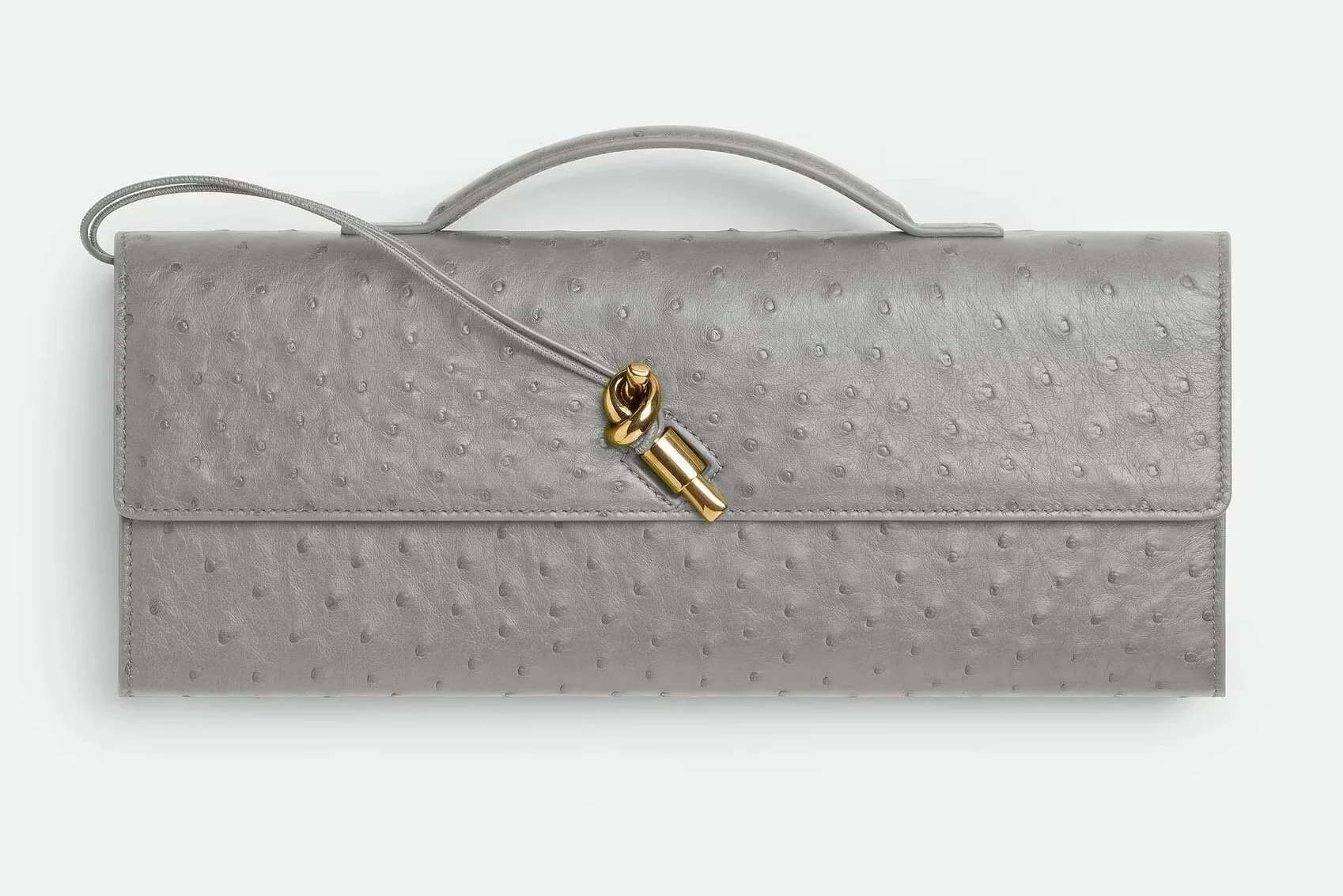
Andiamo Clutch
Color: Sterling | Material: Ostrich leather, Calfskin Lining with Gold Hardware
5.1 in. x 12.2 in. x 1.2 in. with a 0.8 in. handle drop
What Makes Ostrich Different From Calfskin?
Ostrich changes the way a bag reads before you even notice the shape.
The raised quill follicles give the leather a natural pattern and dimension that smooth or grained calfskin cannot replicate. Instead of creating interest through hardware or color, the surface itself becomes the focal point.
Because the markings vary across the hide, no two panels look exactly the same. That variation gives each bag more character and makes the material feel especially distinctive on a clean, familiar silhouette.
Ostrich also sits at a higher price point than standard calfskin, reflecting both the rarity of the leather and the additional care required in selecting, cutting, and placing the panels.
How Ostrich Leather Changes a Silhouette
Ostrich makes the surface of the bag much more active.
On a clean shape like the Andiamo, the quill pattern breaks up the broad leather panels and gives the eye more to look at. Curves, folds, and edges become more noticeable because the texture catches light differently across the bag.
That can make a simple silhouette feel richer and more dimensional without adding extra hardware, contrast stitching, or a louder color.
The shape stays restrained; the leather gives it the interest.
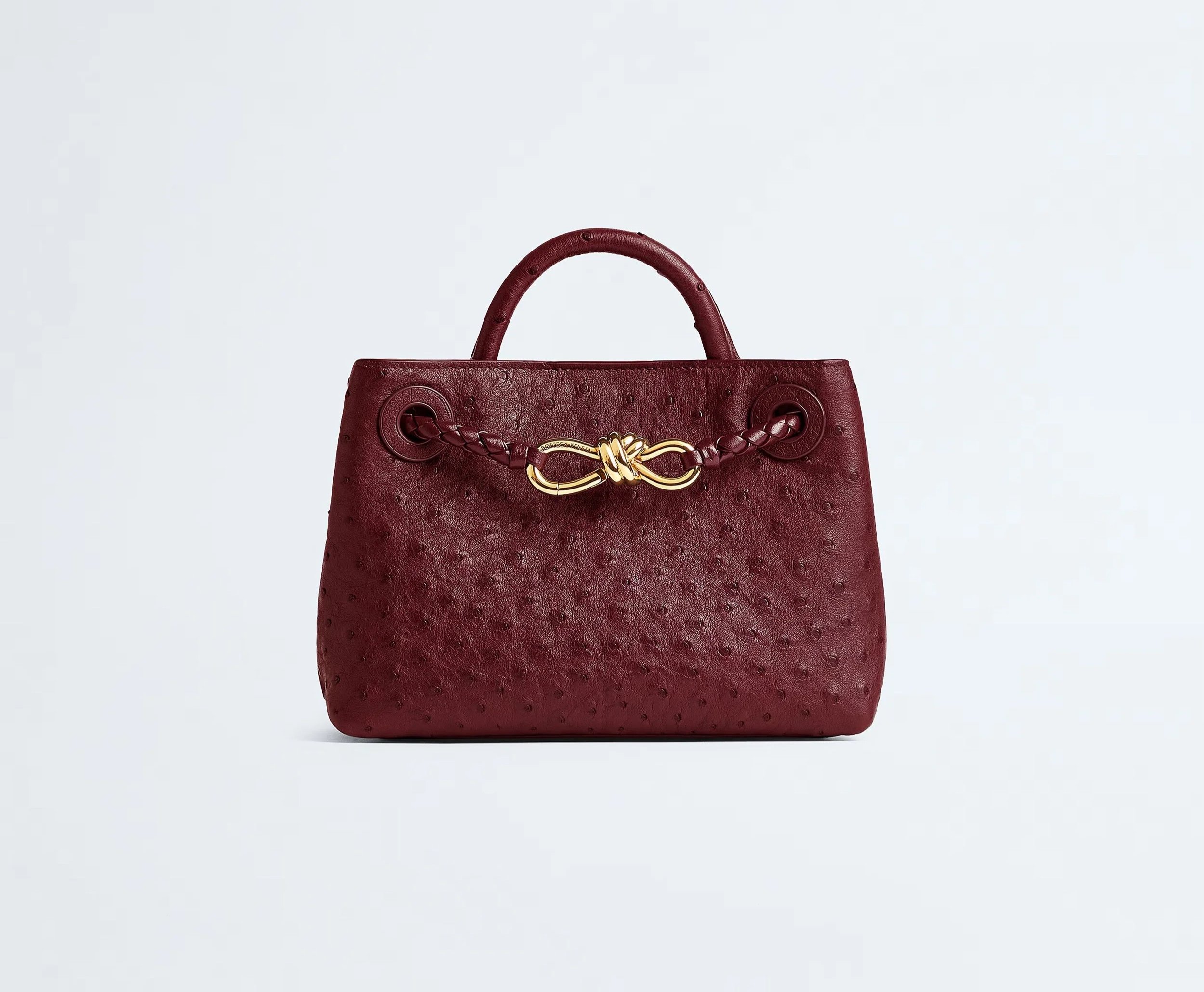
Bottega Veneta Mini Andiamo in Lava Red Ostrich — the compact top-handle silhouette rendered in richly textured ostrich leather, finished with the signature knot detail and adjustable sliding crossbody strap.
Durability & Wear Considerations
Ostrich is more durable than its delicate appearance might imply, but it still benefits from some care.
The leather has good structure and holds its shape well, while the natural quill texture helps disguise light surface wear. The areas most likely to show use over time are the corners, handles, and other points that come into frequent contact with your hands or clothing.
Lighter colors will make that wear easier to see, particularly as the leather begins to darken slightly in high-contact areas. Some owners also wrap the handles with a twilly to reduce direct contact with the leather, especially on lighter colors where darkening from hand oils may become more visible over time.
For that reason, ostrich works best as a bag you rotate rather than carry hard every single day. With regular but thoughtful use, it keeps the matte finish, texture, and depth that make the leather so appealing.
Travel Considerations
Ostrich is an exotic leather, so international travel can require a little more attention than standard calfskin.
Rules vary by country and destination, and customs authorities may inspect exotic-leather goods when crossing borders. Requirements can also differ depending on whether the bag is carried as a personal item or shipped separately.
Before traveling internationally with an ostrich bag, it is worth checking the current import and export rules for both your departure point and destination.
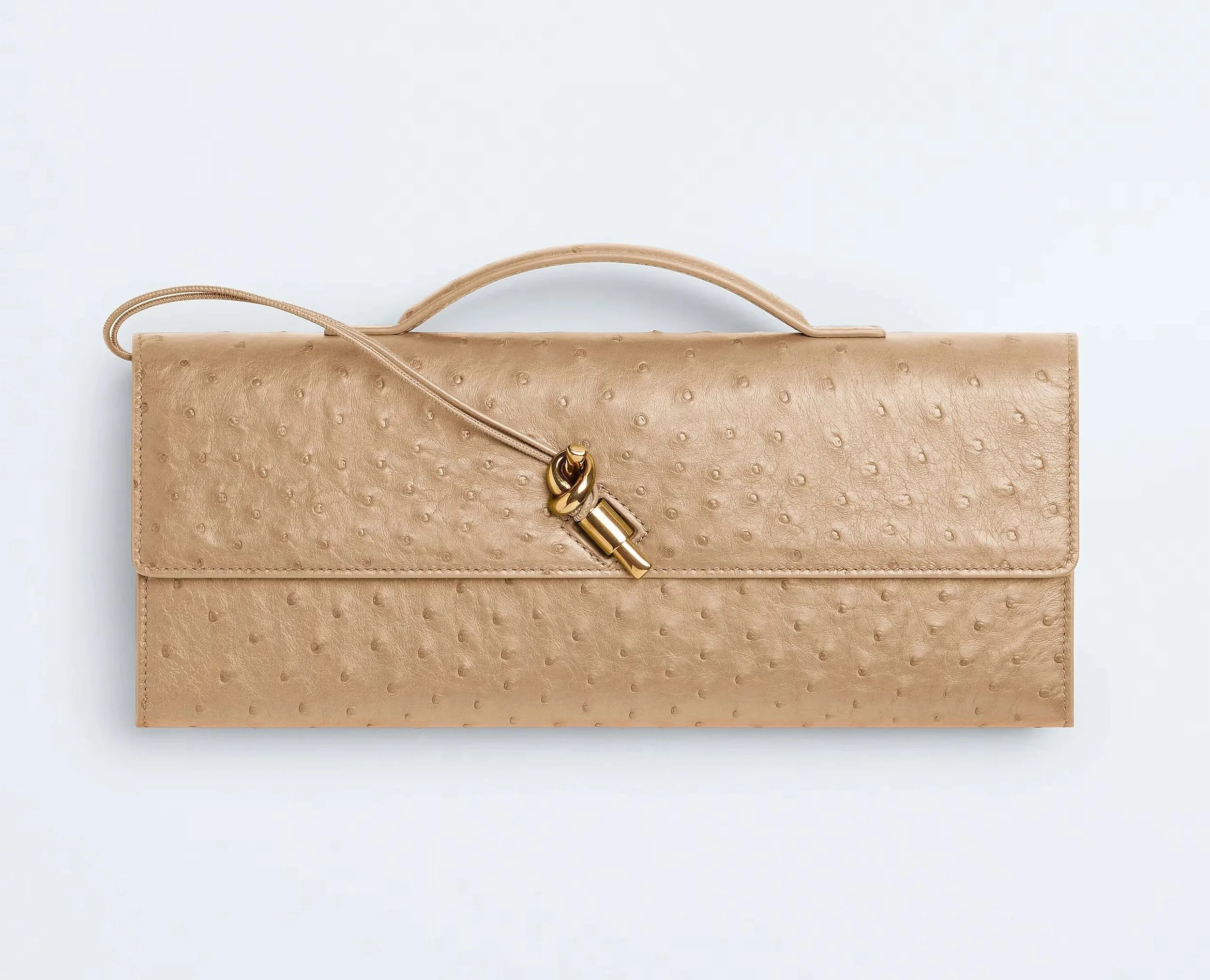
Bottega Veneta Andiamo Clutch in Shore Ostrich — the top-handle clutch rendered in textured ostrich leather, with the signature knot closure adding a sculptural finish.
When Ostrich Leather Makes Sense
Ostrich makes the most sense when your collection already includes the foundational calfskin bags and you want something with more depth and distinction.
On a clean silhouette, the quill pattern becomes the focal point, adding richness and visual interest without relying on bold color, heavy hardware, or embellishment.
It works especially well in a polished, neutral wardrobe because it brings texture and personality while still feeling sophisticated and easy to integrate.
Ostrich is ultimately about choosing a bag that feels special because of the material itself.
When It Doesn’t
Ostrich is less suited to someone who wants a completely effortless everyday bag.
Frequent commuting, repeated friction against clothing, and heavy daily use can make wear more visible over time, especially on lighter colors and along handles or corners.
If your priority is maximum ease and minimal maintenance, calfskin remains the more practical choice. Ostrich is better suited to someone who is comfortable with a little more care in exchange for a leather that feels more distinctive and special.
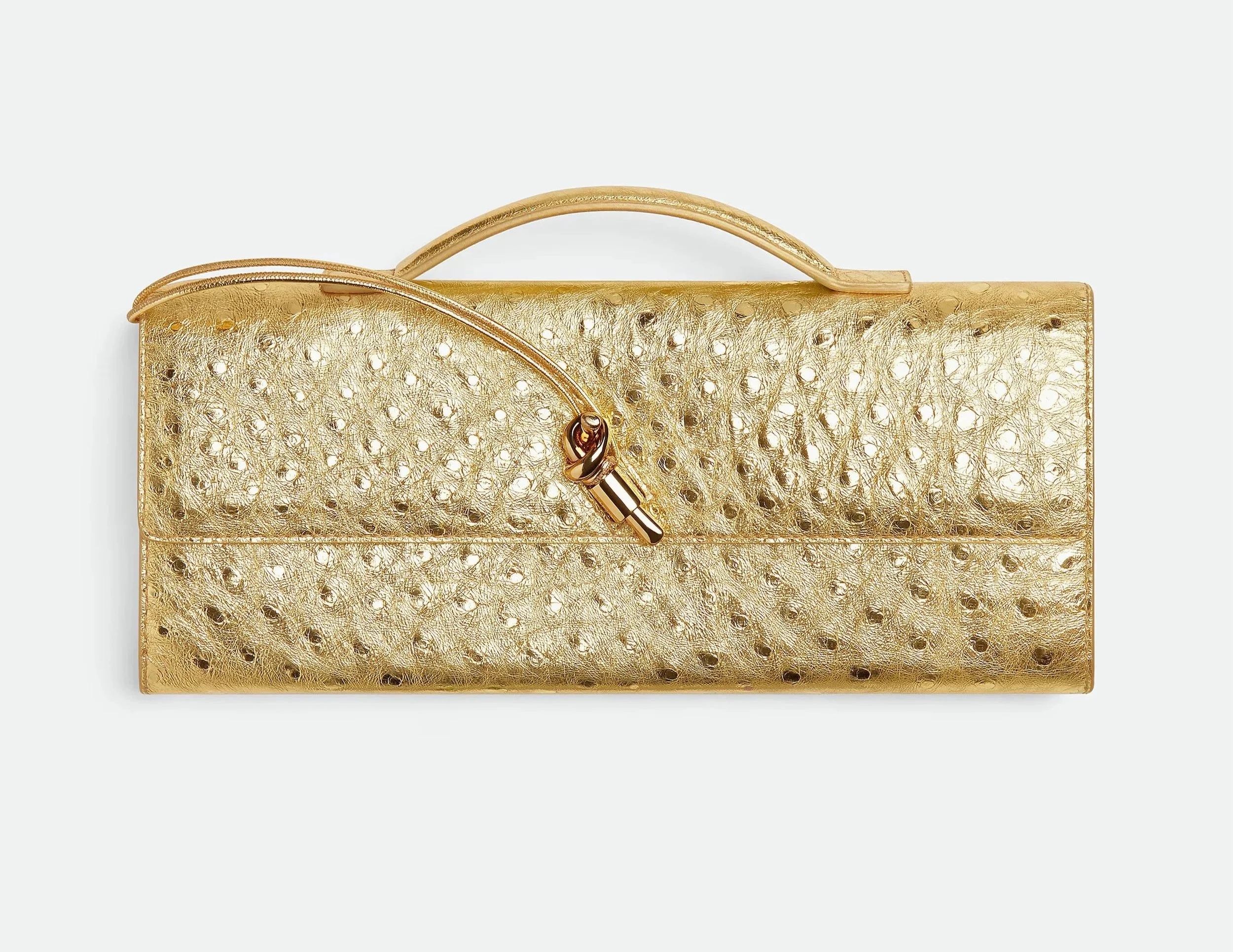
Bottega Veneta Andiamo Clutch in Gold Ostrich — the top-handle clutch rendered in metallic-finish ostrich leather, with the signature knot closure adding a sculptural, jewelry-like detail.
Final Take
As a bag collection grows, adding more depth and individuality can make the entire rotation feel stronger.
Ostrich does that through the material itself. The quill texture gives a familiar Bottega silhouette a richer presence and a noticeably different feel from standard calfskin.
It still fits naturally into the way you already dress, but brings something more special to the rotation.
Ostrich is the piece that gives a Bottega collection another level of interest.
Explore More
Bottega Veneta Andiamo Size Guide — compare the Andiamo across sizes, carry, and everyday use
Bottega Veneta Alligator Leather Guide — explore another exotic leather and how it changes the look, feel, and role of a Bottega bag
Designer Shoulder Bags — compare shoulder bags across designers and materials
Designer Tote Bags — explore larger silhouettes for everyday, work, and travel
The products featured may contain affiliate links.